
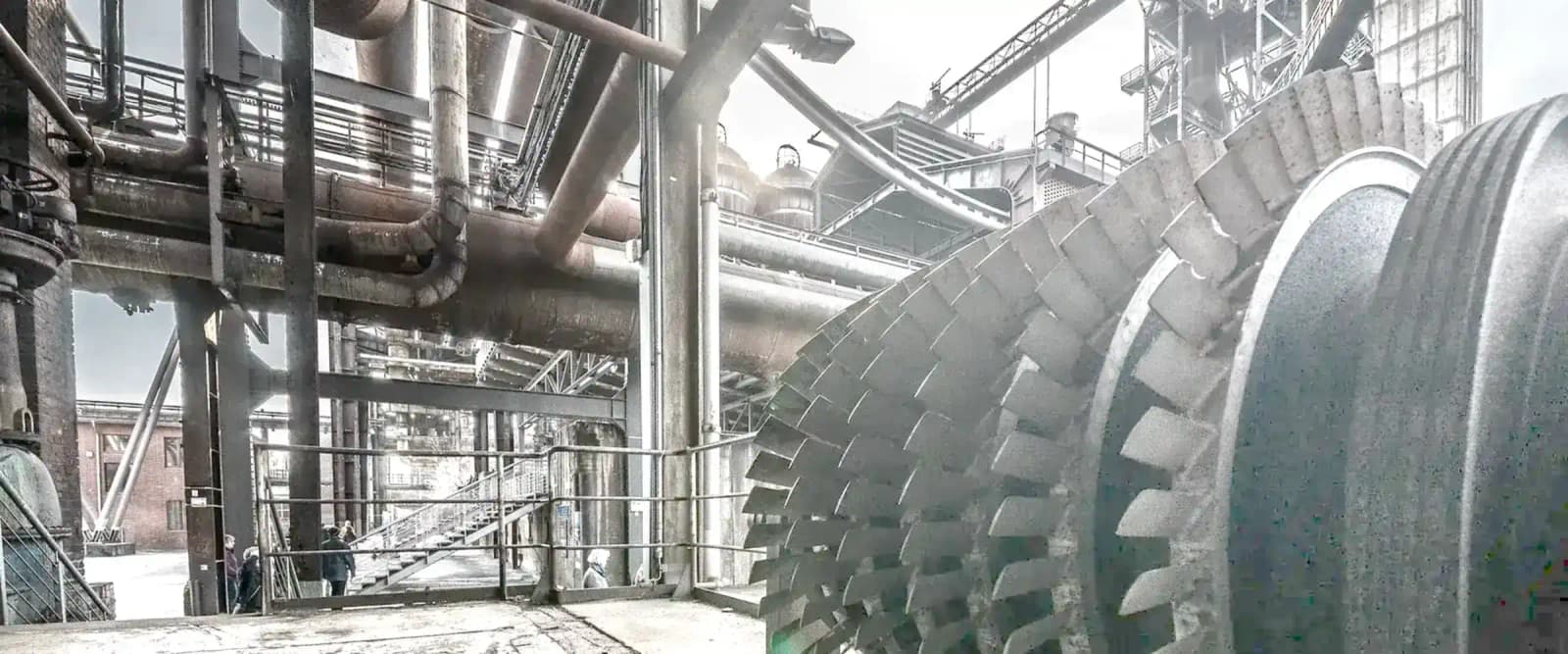
Quality & testing
Six checkpoints, and a straight answer about the rest.
Quality on an industrial site is a sequence of checkpoints, not a slogan. Here is where metal is verified between the intake gate and the loading bay — and, equally usefully, what we do not claim.
Control points
Where the metal is checked.
Chemistry before the cast, gauge after the mill, surface before the pack. Six points, each with a decision attached to it.
- 01At intake
Feedstock assessment
Every load of dross and scrap is assessed and segregated by expected recovery and likely chemistry before it is charged. Mixed feedstock is what produces inconsistent metal, so it is separated at the gate rather than blended and hoped for.
- 02Before casting
Composition
The bath is brought to the agreed target composition before the metal is cast. Aluminium content is held within the declared 97.5%–99.5% band. Correcting chemistry after casting is not a quality system; targeting it before is.
- 03After rolling
Gauge & tolerance
Rolled material is checked against the agreed thickness tolerance. For circles this is the specification that determines whether a blank draws cleanly or thins and tears in the customer's tool.
- 04At blanking
Diameter & roundness
Blanked circles are verified for diameter and roundness against the order before they are stacked.
- 05Surface
Visual inspection
Draw-critical and coating-critical material is inspected for surface condition. A defect invisible in the blank becomes very visible after anodising or non-stick coating.
- 06Before dispatch
Final check & documentation
Finished pieces are inspected for form, finish and gauge. Test documentation is issued with the consignment where the order calls for it — request it at order stage so it is scheduled with the heat rather than chased afterwards.
Standards
What we certify, and what we do not.
Certification walls are easy to build and easy to check. We would rather be accurate here than impressive.
In place today
- Registered partnership firm with Udyam MSME registration
- In-house checkpoint sequence from intake to dispatch
- Composition targeted to specification before casting
- Test documentation issued with dispatch on request
- Direct access to the directors on any specification question
Not claimed
Aerospace qualification
We do not hold aerospace approvals and do not supply into aerospace applications.
Published fixed grade tables
We publish what we can hold for every order. Grade equivalence is confirmed against your specification at enquiry.
Absolute emissions claims
The plant is equipped with bag filters and dust collection. We describe the equipment rather than claim zero.
If your procurement process requires a certification we do not yet hold, tell us which one at enquiry stage. It is a more useful conversation than discovering it at the purchase-order stage.
Getting a useful answer
Send us this and we can be specific.
The fastest quotes are the ones where we do not have to guess. Whatever you already give your current supplier is exactly the right amount of information.
- The specification or certificate you currently buy against
- Dimensions and the tolerance your tooling needs
- Monthly volume and how steady it is
- Where in your process the material is used
- Whether you need documentation with each dispatch
- Delivery location
Do you supply a test certificate with the metal?
Test documentation can be supplied with dispatch. Specify the requirement at order stage so it is scheduled with the heat rather than requested after delivery.
Are you ISO 9001 certified?
We do not currently publish a certification we do not hold. What we can describe is the checkpoint sequence the plant actually runs — feedstock segregation at intake, composition targeted before casting, gauge and dimensional verification after rolling and blanking, surface inspection on draw-critical material, and a final check before dispatch.
How do you keep chemistry consistent between deliveries?
By segregating feedstock at intake by expected chemistry and composing the charge against a target rather than melting mixed material. A supplier whose chemistry moves between loads costs a foundry scrap rate, which is the failure mode this is designed around.
What tolerance can you hold on circles?
Thickness is held to the tolerance agreed for your order. Send the tolerance you currently work to and we will confirm against it before quoting rather than publish a number we cannot hold for every job.
What happens if a consignment is not to specification?
Call the number on this site. Both directors are in the business daily and specification problems are dealt with directly rather than through a queue.
Request a quotation
Send us your specification.
Tell us the grade, the gauge and the quantity. We will confirm what we can hold, and quote against it.